Case Study
Designing Tall Buildings — Technical Illustration
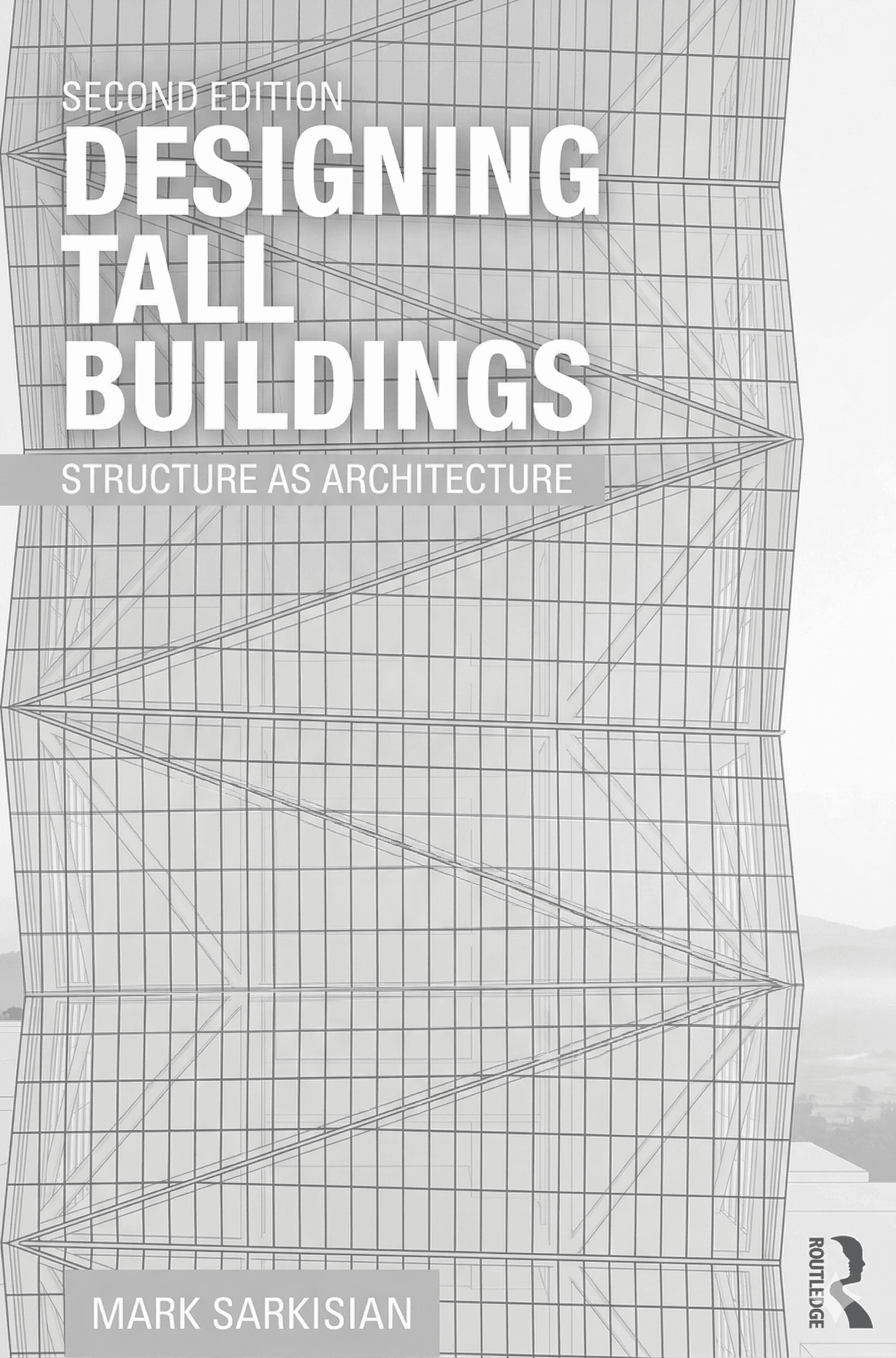
Technical illustration for the first and second editions of Designing Tall Buildings: Structure as Architecture by Mark Sarkisian, published by Routledge and used in Stanford Engineering courses.
- Role
- Technical Illustrator
- Status
- Built Work
- Stack
- Technical Illustration, Structural Systems, High-Rise Design, Publication
TL;DR: Technical illustration for the first and second editions of Designing Tall Buildings: Structure as Architecture by Mark Sarkisian (SOM). Published by Routledge, now in its third edition. Used as a textbook in Stanford Engineering design studio courses. The illustration work required deep knowledge of structural systems, forces, and high-rise building behavior.
The Book
Designing Tall Buildings: Structure as Architecture by Mark Sarkisian is a college-level textbook published by Routledge. It covers the fundamentals of high-rise structural design across chapters on forces, systems, mechanisms, performance, and environment. Projects drawn from SOM's portfolio of built high-rises demonstrate each concept.
The book is used in design studio courses at Stanford University that combine technical rigor and creative thinking in architecture and engineering through tall building design.
It is now in its third edition with over 400 illustrations and updated international code requirements.
My Role
I worked alongside Mark Sarkisian at SOM to create the technical illustrations for both the first and second editions of the book. Mark is the Partner-in-Charge of Seismic and Structural Engineering at SOM's San Francisco office, responsible for innovative structural solutions on more than 100 international building projects.
The illustration work covered structural systems, force diagrams, load paths, lateral systems, seismic behavior, and building performance concepts. Each diagram had to communicate how a building actually works. Not a rendering. Not a sketch. A clear, precise explanation of structural behavior.
What This Required
Technical illustration at this level is not graphic design. It requires understanding the subject deeply enough to translate it visually.
- Structural force paths and load distribution in high-rise systems
- Lateral system behavior under seismic and wind loading
- The relationship between architectural form and structural logic
- How to communicate complex engineering concepts to students and professionals
You cannot draw what you do not understand. Every illustration had to be technically accurate and pedagogically clear. The audience is engineering students and practicing professionals. There is no room for ambiguity.
Why This Matters
This project sits at the intersection of technical knowledge and communication. The same skills that made the illustrations effective (understanding systems, translating complexity into clarity, precision in representation) are the foundation of what I do today as a BIM Manager.
BIM is technical communication. A model is an illustration of how a building is constructed. The tools have evolved from pen and ink to Revit and parametric scripting. But the core requirement has not changed: understand the system, then represent it clearly.
Key Takeaways
- Technical illustration requires deep subject knowledge, not just drawing skill
- Communicating structural systems visually is a foundation for BIM and computational design
- The book bridges architecture and structural engineering education at the university level
- Working alongside Mark Sarkisian at SOM provided direct exposure to world-class structural thinking
References
My Role
Technical Illustrator