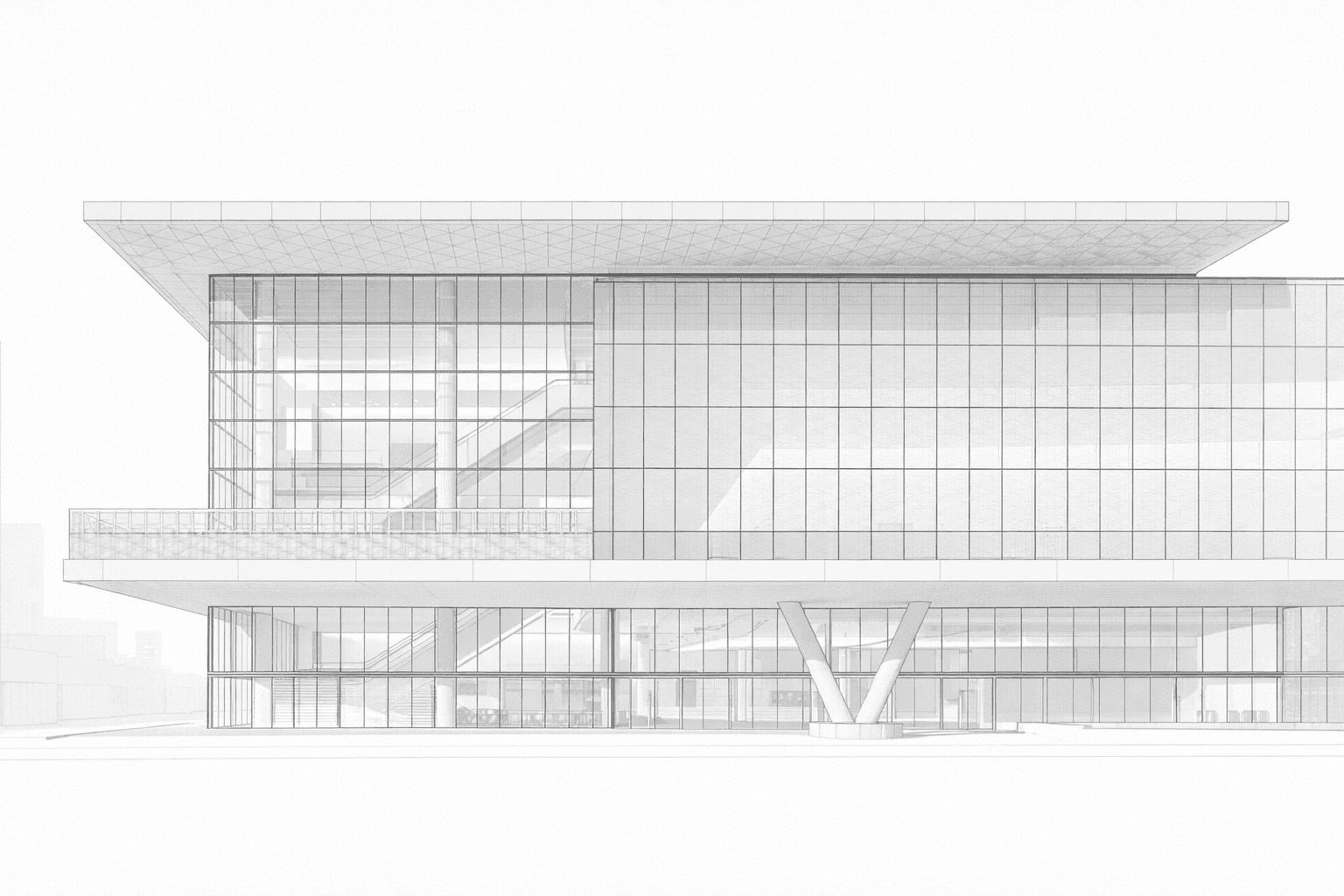
Convention Center Expansion
Moscone Center Expansion — BIM Coordination at Scale
San Francisco, California·2019·SOM
Lead BIM coordination on the Moscone Center Expansion at SOM. Co-located multidisciplinary team, full Revit integration across Architecture, Structure, and MEP. The model was selected as the featured cover of Revit 2020.
Architecture · Structure · MEP
- Role
- BIM Manager
- Firm
- SOM
- Location
- San Francisco, California
- Year
- 2019
- Type
- Convention Center Expansion
- Status
- Built Work
- Tools
- Revit, Navisworks
In Brief
Co-located Architecture, Structure, and MEP teams working from a single Revit model — selected by Autodesk as the featured cover of Revit 2020.
The Project
The Moscone Center Expansion in San Francisco is one of the largest convention center projects on the West Coast. Massive subterranean structures, complex coordination across disciplines, and a timeline that demanded precision at every stage.
I joined the project at SOM from its inception.
Co-location Changes Everything
We operated out of a shared space at 4th and Mission. Architecture, Structure, and MEP all sat side by side. Not in separate offices trading files on a weekly cycle. In the same room, looking at the same model, solving problems in real time.
That setup changes how coordination works. Issues surface in conversation before they become clash reports. Design decisions account for structural and MEP constraints from the start, not as an afterthought. The model stays clean because everyone is accountable to it every day.
This is not a common setup on large-scale projects. Most teams coordinate through file exchanges and scheduled review meetings. At Moscone, coordination was continuous. The model reflected reality because the people building it were in the room together.
Coordination Loop
- 01
Co-located teams
Architecture, Structure, and MEP side by side at 4th and Mission.
- 02
One shared model
A single Revit environment as the source of truth for every discipline.
- 03
Continuous coordination
Issues surface in conversation, before they become clash reports.
- 04
Clean data, daily
Model health treated as a daily practice, not an end-of-project task.
The Revit 2020 Cover
Autodesk selected the Moscone Center model as the featured cover of Revit 2020.
For a BIM professional, this is a specific kind of recognition. It is not about the architecture looking good in a render. It is about the data. The model health. The coordination quality. The technical integrity of the information behind the geometry.
Being selected means the model met a standard that Autodesk was willing to put on the front of their software. Clean data, well-structured families, disciplined coordination across disciplines.
What I Carry Forward
The lessons from Moscone are the foundation of how I work today as a BIM Manager in Bangkok.
Co-location taught me that the best coordination happens when teams share context, not just files. Disciplined data management taught me that model health is not a cleanup task at the end. It is a daily practice. And treating the model as the single source of truth taught me that governance matters more than geometry.
The tools evolve. Revit updates. Cloud platforms shift. But the principles stay the same: clean data, real coordination, and systems that reflect how the project is actually built.
References
My Role
BIM Manager
- Lead Structural BIM coordination working alongside Architecture, MEP, and the Contractor
- Managed the co-located Revit environment at 4th and Mission, San Francisco
- Oversaw model health, standards compliance, and coordination workflows
- Maintained the large-scale convention center model from inception through completion
- Supported multidisciplinary integration in a real-time, shared modeling environment
What this project demonstrates
- Co-located, multidisciplinary BIM coordination at building scale
- Model health as a daily practice, not an end-of-project cleanup
- Data integrity recognized by Autodesk's Revit 2020 cover selection
- Governance and shared accountability across all disciplines