Case Study
LACMA — David Geffen Galleries (Peter Zumthor)
Case study for SOM's collaboration on the Los Angeles County Museum of Art (LACMA) David Geffen Galleries with architect Peter Zumthor. Computational design exploration using Delaunay triangulation, Voronoi panelization, and code-driven geometry.
- Role
- BIM / Design Technology
- Status
- Case Study
- Stack
- Computational Design, BIM, Design Technology, Python, Revit API
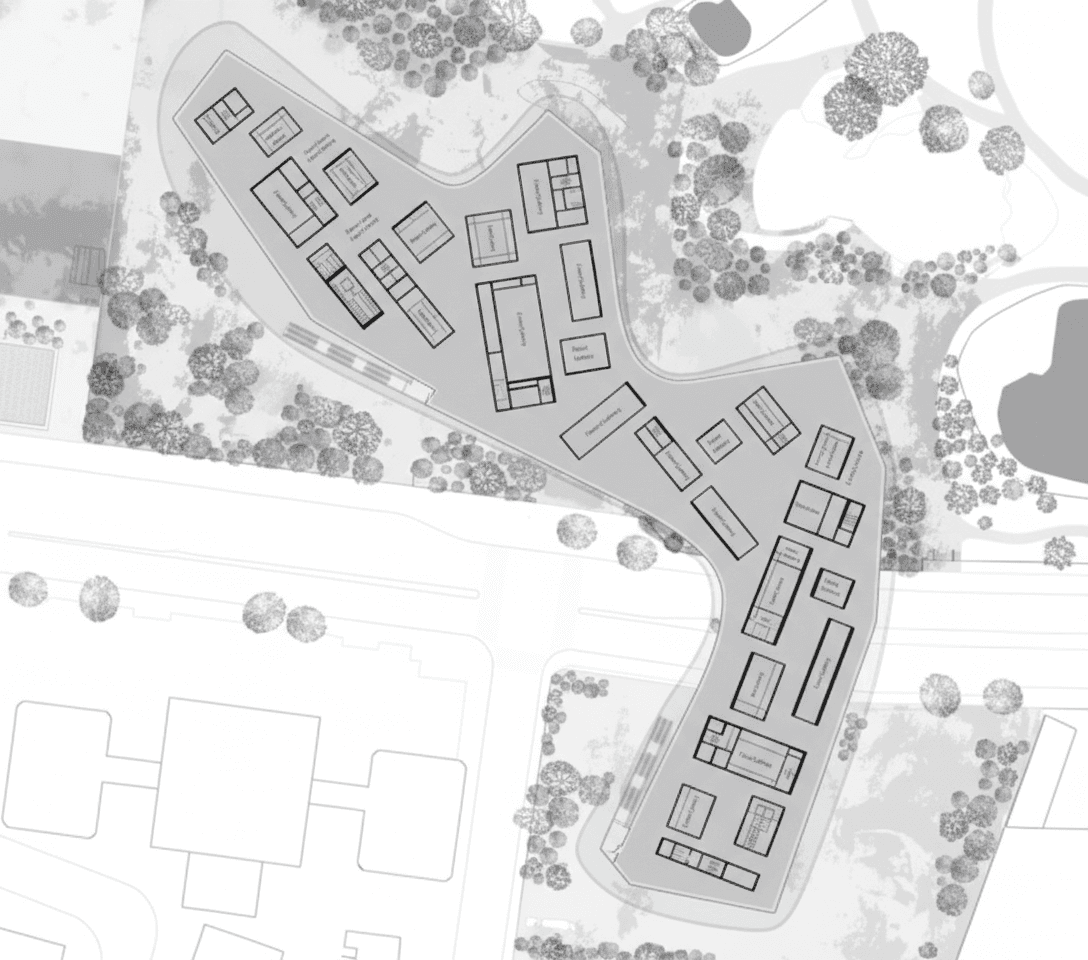
Interactive Building Footprint
Adjust the slider to control the density of the Delaunay triangulation mesh clipped to the building footprint.
3D Model Exploration
Toggle between the two views below to see how the Delaunay triangulation translates from a 2D footprint into the full three-dimensional building form.
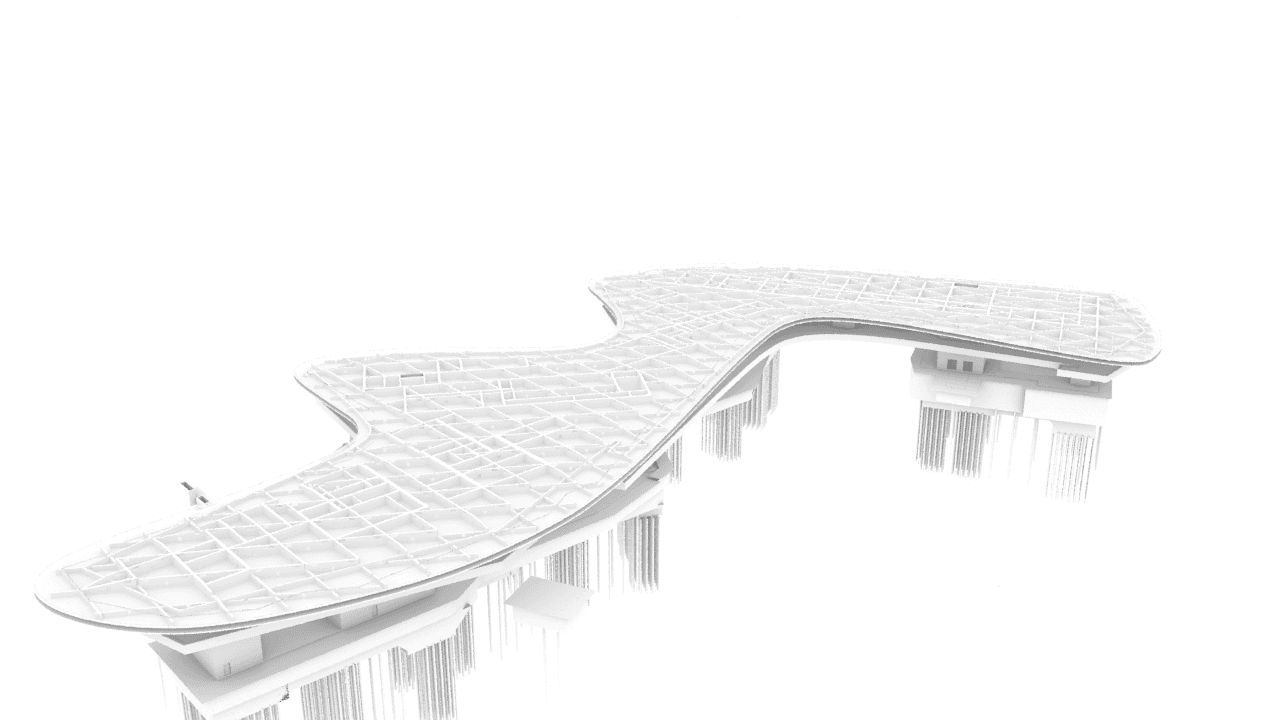
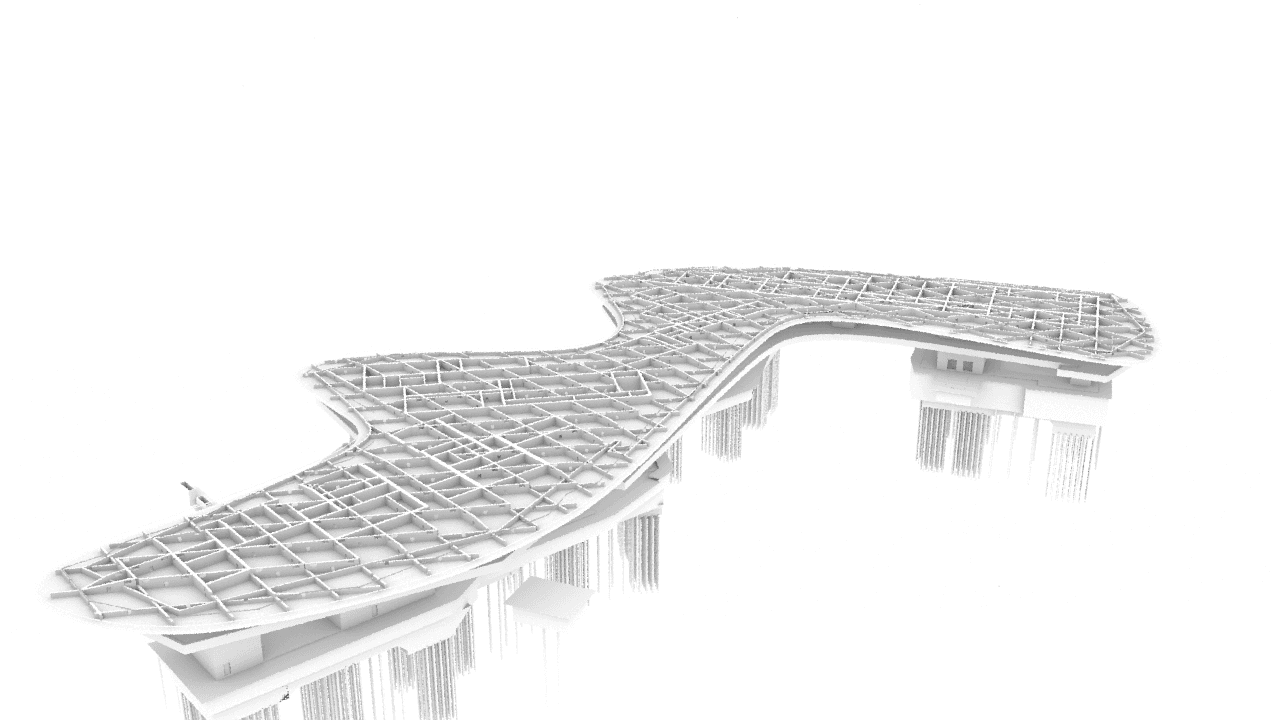
Final Render — auto-transitioning
Project Overview
The Los Angeles County Museum of Art (LACMA) David Geffen Galleries is a landmark cultural project designed by Swiss architect Peter Zumthor in collaboration with SOM (Skidmore, Owings & Merrill). The building spans across Wilshire Boulevard — one of the busiest corridors in Los Angeles — creating a seamless, elevated museum experience that bridges the north and south campuses.
The design is defined by its irregular, organic plan shape — a free-form footprint that resists conventional orthogonal geometry. At roughly 387,500 square feet, the single-story, tar-colored concrete structure hovers above the ground on pillars, with floor-to-ceiling glass offering views of the surrounding Hancock Park landscape and the La Brea Tar Pits. The semi-transparent, flowing form was conceived by Zumthor to blur the boundary between interior gallery space and the natural environment.
Computational Design & Geometry Exploration
The irregular building shape demanded a code-driven approach to design. Standard architectural tools could not keep pace with the number of iterations required as the geometry evolved through multiple design phases. This is where code and architecture converged — computation allowed the team to explore complex geometry rapidly while maintaining precision.
Delaunay Triangulation
The building's non-rectilinear footprint presented a fundamental challenge: how do you subdivide an irregular, curved boundary into a workable structural and panelization mesh? Delaunay triangulation provided the answer. By generating a triangulated mesh within the building outline, the team could:
- Decompose the complex plan into discrete, analyzable elements
- Test structural configurations across the irregular form
- Rapidly iterate on mesh density and distribution as the design evolved
- Ensure well-conditioned triangles (maximizing minimum angles) for downstream structural and fabrication analysis
The interactive visualization above demonstrates this process — adjusting the mesh density shows how the triangulation adapts to the building footprint at different resolutions, from coarse structural studies to fine-grain panel layouts.
Voronoi Roof Panelization & Folds
Beyond the plan geometry, the roof system required its own computational treatment. A Voronoi-based panelization strategy was explored to subdivide the roof surface into panels that could accommodate the building's gentle curves and folds. The Voronoi approach offered:
- Organic panel shapes that respected the free-form roof geometry
- Natural fold lines that aligned with structural loads and drainage paths
- A fabrication-ready subdivision that could be translated to flat-panel manufacturing
- Visual continuity across the sweeping roof plane
The interplay between Delaunay (for plan and structural mesh) and Voronoi (for roof panelization) created a complementary computational framework — two sides of the same geometric coin, each solving a different aspect of the building's complexity.
Iterative Design Through Code
Throughout the design process, multiple iterations of the building geometry were explored. Each iteration required re-meshing, re-panelizing, and re-analyzing the entire form. Writing these workflows in code — rather than relying on manual modeling — meant the team could:
- Evaluate a new geometry iteration in minutes rather than days
- Maintain consistency between the structural mesh, roof panels, and facade systems
- Quickly test "what-if" scenarios as Zumthor refined the building's silhouette
- Bridge the gap between architectural intent and engineering feasibility
My Role
As part of the design technology team, I worked on the computational geometry pipelines that supported the design exploration — from Delaunay mesh generation across the irregular footprint to Voronoi-based roof panelization studies. The work involved writing custom scripts to automate geometry subdivision, integrate with BIM workflows, and deliver analysis-ready models that kept pace with the rapid iteration cycles demanded by the design process.
References
My Role
BIM / Design Technology