dwp Press Conference 2025
Designing with AI — dwp Press Conference 2025
How AI is changing design exploration, visualization, personalization, and the future architectural workflow.
- Event
- dwp Press Conference
- Date
- Location
- Bangkok, Thailand
- Session
- AI and the future of architectural design workflows
- Role
- Speaker / Presenter
- Organization
- dwp — design worldwide partnership
- Topics
- ai · architectural design · visualization · design technology · personalization
By Danny Bentley · Published
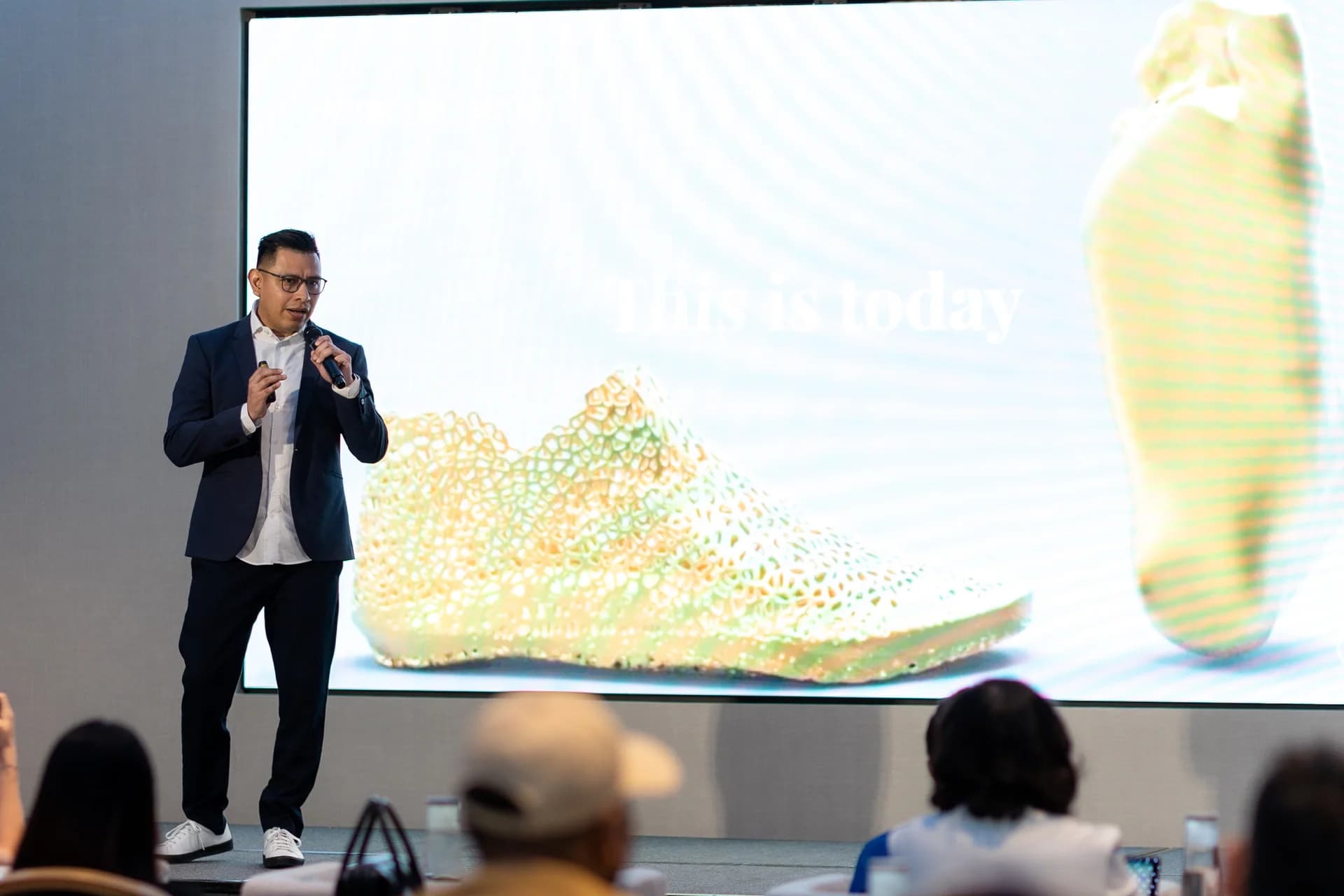
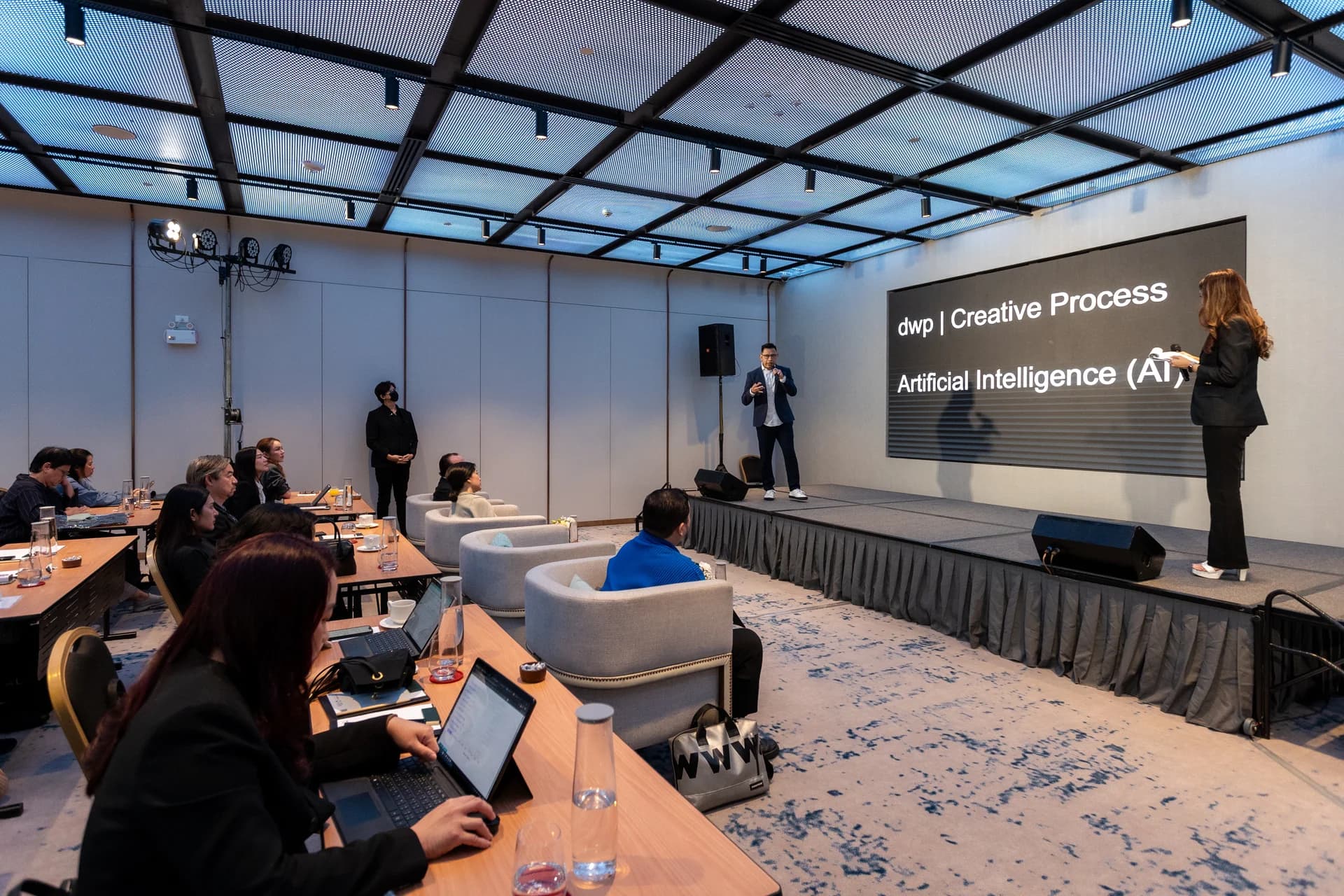
AI is already changing how designers explore ideas, visualize options, and consider individual needs. At the dwp Press Conference on 24 January 2025 in Bangkok, I presented a sequence connecting personalization with responsive architecture, human + AI collaboration, and faster design exploration.
The presentation moved from examples outside architecture into practical design workflows. The question running through it was how these tools could give teams more room to explore while keeping people responsible for the decisions.
Design is becoming personal
The opening examples included 3D-printed shoes, customized fashion, and personalized health. Each showed technology making it possible to respond more directly to an individual, rather than assuming that one solution will suit everyone.
For architecture, that raises questions about how spaces respond to the people who use them. Personal preferences matter, alongside climate, culture, and environmental conditions. These examples offered a direction to investigate; they did not suggest that fully personalized buildings are already standard practice.
From personalization to responsive architecture
Responsive architecture extends that thinking to the relationship between a building and its context. A space could respond more closely to changing conditions and individual needs, with safety, comfort, and sustainability guiding the questions we ask.
This connects with my broader design-technology work: using tools to understand the consequences of a design choice. Responsiveness needs a purpose. Teams still have to decide what should change, who benefits, and how a response fits the place and the people involved.
Tomorrow’s workflow
The presentation explored a possible future workflow. Humans and AI could generate and explore ideas together. Specialists would then refine those ideas into coordinated designs. Further along, advanced production systems and robotics may increasingly assist fabrication and assembly.
This was a way to consider how different kinds of work might connect. It was not a guaranteed prediction or a description of every workflow currently used at dwp. Collaboration, research, and exploration remain essential when moving from an initial idea to something that can be built.
AI as a design accelerator
AI-assisted design can expand the number of options a team considers and shorten the time between an idea and a visualization. Automating repetitive tasks may also leave more time for comparison and refinement.
Speed becomes useful when it supports a design decision. AI and simulation can help teams bring performance data into that discussion, but an image alone cannot establish comfort, buildability, or environmental performance. Those questions need appropriate analysis and specialist input.
From inspiration to iteration
Magazines, material references, Pinterest, and sketches have long helped designers build a direction. Time often limits how many alternatives can be developed far enough to compare.
Text-to-image tools and text combined with style references offer another way to explore. Prompts can produce several visual directions quickly, making it easier to question an initial assumption or discuss a different approach. Drawing and sketching still belong in that process. The tools expand the ways an idea can be developed and reviewed.
White model to design directions
The clearest practical example began with a clean white 3D model. A style reference and prompts then helped generate multiple rendered directions for review and selection.
That sequence places AI within an existing architectural workflow. The model provides a starting point; the generated images offer possibilities to discuss. Designers still need to examine what those images suggest and refine a direction into a coordinated proposal.
The value is more room to explore, compare, and refine ideas. Faster images can help that conversation, while design judgment stays with people.
The principle